
So I’ve had a lot of free time during my Sabbatical, and while pondering relatively heavy topics along with the rest of the country in recent days, my mind has meandered to other (less) significant topics like NBA Free Agency.
Specifically, I’ve been thinking about Kevin Durant and the team he will play for next season (and Jeremy Lin, of course, but Durant seems to carry a bit more intrigue around the country right now).
Put simply, I think Durant should choose to play for the Knicks.
Before you label me foolish or misguided, please allow me to list why he should choose the Knicks over everyone else.
1) The Knicks play in the Eastern Conference, a far more desirable Conference to play in than the West. If Durant’s main goal is to win a championship, then it makes sense that the easiest path to the Championship goes through the East.
Of course, the Cavs are the defending champs and defeating them is no small task, but the last I checked the Western Conference still has perennial winners in the Golden State Warriors, the Spurs, the Thunder, the Clippers, and the up-and-coming T-wolves and Pelicans. The Eastern Conference offers a far easier path to the Championship than the Western Conference – both now and in the foreseeable future.
2) Of the 3 Eastern Conference Teams that Durant will meet with – Boston, Miami, and the Knicks – the Knicks have the best supporting cast. I know, this is arguable, especially since both the Celtics and Heat performed far better than the Knicks last year (almost everyone performed better than the Knicks, btw).
However, the trade for Rose changes everything. I should clarify – the trade for Rose in his contract year changes everything.
I know Bulls fans might be skeptical of Rose’s ability to stay healthy, but if he is healthy, the trio of Rose (contract year, 27 years-old, transcendent talent if he’s on top of his game), Porzingis (potentially transcendent player who’s only 21?!?!), and Melo (transcendent talent whom I hope is not past his prime).
Moreover, if Rose doesn’t work out, Durant can recruit Westbrook to come play in New York next year.
Which of the other Eastern Conference teams can offer this kind of combination of youth/talent? Boston has youth but they’re not quite as talented, and Miami has talent but they’re not quite as young (even Whiteside seems uncertain that he’ll stay).
Moreover, this is NEW YORK CITY we’re talking about.
Winning ONE championship in New York would mean more than winning multiple championships anywhere else.
I know, this makes NO sense to non-New Yorkers.
But ANYONE who’s lived in NYC knows what I’m talking about, and knows that it’s true.
3) Why Durant shouldn’t join any of the other Western Conference Teams
- The Clippers – I’m surprised they got a meeting. I don’t think they have the talent/youth to make a case for being a perennial winner, especially in the Western Conference.
- The Warriors – As good a thing as the Warriors have going on, I can’t imagine that Durant would join a historically great team to chase a ring. I know people dogged Lebron for ring-chasing by joining the Heat, but there’s no way that can compare to Durant joining a 73-win team as a free agent. Granted, I think Steph is awesome and is one of the most humble superstars whom anyone would love to play with, but yeah, I just can’t see Durant joining them because it would be almost too easy.
- Sidenote: In addition, it must be SO awkward right now on the Olympic Team. With Klay, Draymond, and Barnes playing on the squad (along with Durant), how weird must it be for them knowing that if Durant comes, Barnes has to go. While Melo can be unabashed in his wooing of KD, Klay and Draymond must understandably walk a fine line when talking about Durant, especially if they’re pals with Barnes, which the team chemistry on GSW seems to indicate.
- The Spurs – I don’t think Durant can choose the Spurs over OKC, especially after OKC beat them in the playoffs this year. I’m sure any consideration of the Spurs would stop when Westbrook gets in Durant’s ear and says, “How can you join them after we beat them in 6?!”
- The Thunder – I seriously think it’s going to come down to the Thunder or the Knicks, especially after the Ibaka-Oladipo trade last week. Seriously, the Thunder are loaded with Oladipo/Sabonis, and with Adams’ emergence, I think the Thunder are going to have some major swag heading into next season if their full team comes back. The only thing that makes OKC less desirable is…
- Familiarity Breeds Boredom – I wonder if KD wants to feel what it’s like to play somewhere else. I think Lebron had a little bit of this when he joined Miami. I think we all do. The grass can seem greener somewhere else.
- Westbrook’s Team Now? – I wonder if KD would like to go to a team where he’s the clear go-to guy. I think his friendship with Russell is real, but yeah, I’m wondering if KD would like to go somewhere where he’s clearly the #1 option. Sidenote: This is also what makes the GSW jump less likely. I think it’d be personal if Durant leaves Westbrook to play with Curry. This might be reading too much into it, but yeah, since Russ & KD are boys, I think Westbrook would be hurt/angered if Durant went to GSW, and I think Durant would also feel disloyal if he were to do that to Russ. Uh, this is obviously total conjecture because I know neither Russ nor KD personally.
- How important is it for Durant to play in the Eastern Conference? Again, if this matters to KD – which I think it should – then I think KD should choose the Knicks.
One super-random wild card in all this is that KD considers Carl Lentz, pastor of Hillsong NY, his good friend and pastor. I love it.
Carl, let’s make this happen.
So there you have it.
KD, become a legend in NYC.



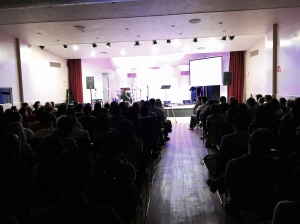
 As someone who has lived in NYC since 2001 (and first visited Redeemer in 2000), it’s been really cool to get a first-hand look at how Redeemer has impacted our city and world for 13 of those 25 years.


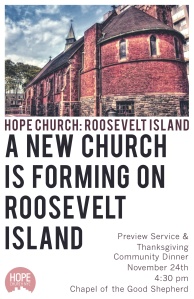

 while waiting